Does Granite Need Polishing? Signs, Sealing and Daily Care
Does granite need polishing? Sometimes. Granite has a reputation for being almost indestructible, and it is much tougher than marble. It can still lose its shine, though, and many owners do not know whether their stone needs polishing, sealing or simply a better clean. This guide helps you work out which one applies.
Why granite loses its shine
Granite resists most kitchen acids and scratches, but it still wears.
- Heavy foot traffic slowly dulls floors, especially at entrances.
- Grit under chairs and pans wears down busy areas.
- Greasy residue and harsh cleaners leave a film that looks like dullness.
- Old coatings wear unevenly and leave patches.
First, try a proper clean
Many dull granite tops are simply dirty. Wash the surface with warm water and a little mild soap, then dry it with a soft cloth. If the shine comes back, you only need a better routine.
If it still looks flat, or if you can see a worn area in the light, the surface itself has worn down.
Does your granite need sealing?
Not all granite needs the same protection. Some dense stones absorb very little, while lighter stones can soak up oil and water. A simple test tells you.
- Put a few drops of water on the stone.
- Leave them for around ten minutes.
- Wipe the area dry.
- If the stone has turned darker, it is absorbing water and needs sealing.
Sealing helps against stains, but it does not add shine.
Does granite need polishing? The signs
Polishing makes sense when you can see:
- Dull paths on a floor.
- Worn areas on a kitchen top.
- Light scratches that do not wipe off.
- Patchy shine from old coatings.
Granite is very hard, so it needs heavy machines and diamond pads. Crystallization products made for marble will not work on it. Be careful with any quick polish that relies on wax. It may look good for a while, but it will wear away. See how our granite polishing service works.
What about chips and cracks?
Chips on edges are common around sinks and on stair treads. A colour-matched filler can make them much less visible. Cracks need checking first, in case the stone is moving because of the base beneath it.
Is it really granite?
Many dark or speckled stones are sold as granite, but some are closer to other stone types. It matters, because the right care depends on the stone. Lemon juice is a simple clue. Put a drop on a hidden corner and wipe it off after a minute. If it leaves a dull mark, you may have a calcium-based stone, not true granite.
Some black stones are also dyed or waxed at the factory to look darker. If colour comes off on a cloth when you use a solvent, ask a stone specialist to look at it before you treat it.
Granite floors and stairs
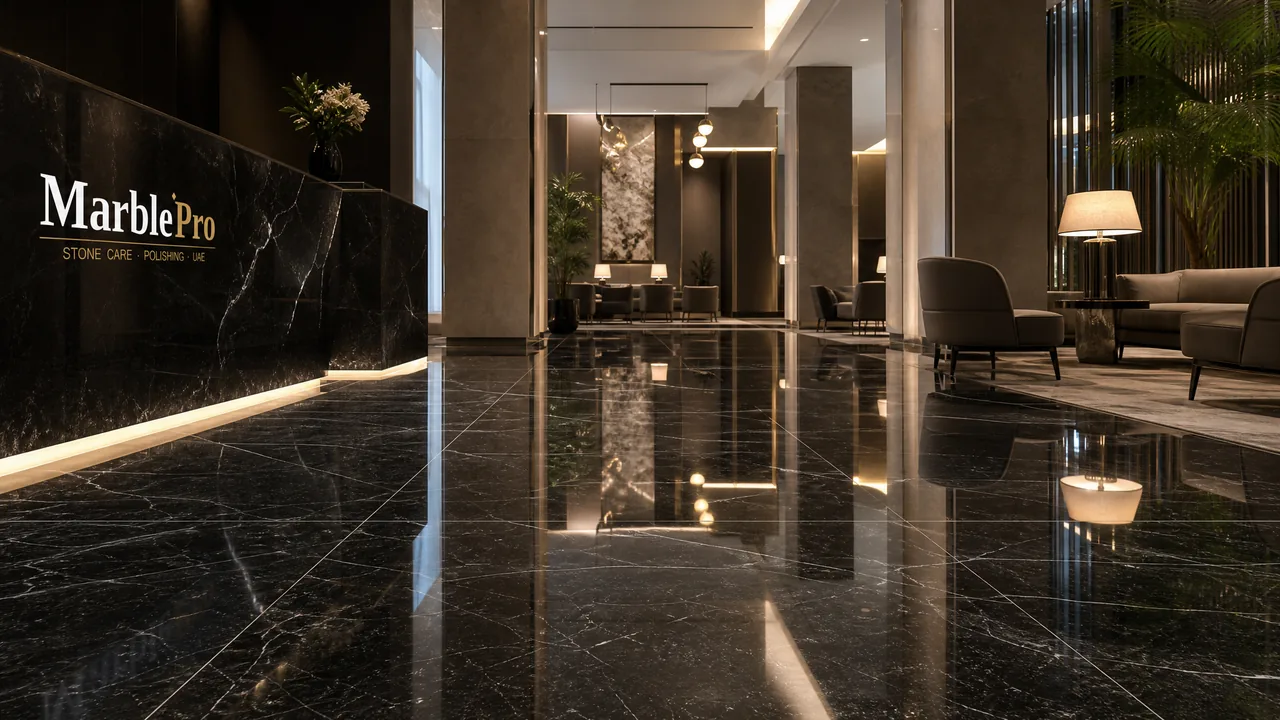
Granite floors in villas and lobbies wear slowly, but they show dull paths in time. Sand scratches the polish, and heavy cleaning can leave a film. Stair treads need extra care, because the front edge takes the most wear and a high polish can be slippery. Ask for a finish that suits how you use the stairs.
Granite in kitchens
Granite is a strong kitchen surface, but it has some weak points.
- Oil can darken lighter stones if the seal has worn away.
- Edges around the sink can chip.
- Knife blades can dull quickly on the hard surface.
- Very hot pans can stress the stone, especially near a joint.
A quick wipe with warm soapy water after cooking prevents most problems. Avoid glass cleaners, which can leave a film.
Mistakes to avoid
- Sealing a dense granite that does not need it. The sealer stays on the surface and leaves a haze.
- Using oil or wax to make the stone look darker. It wears off unevenly.
- Using vinegar every day. Granite resists acid, but it can harm the sealer.
- Using a rough pad on a polished top.
If your granite looks hazy after a recent seal, a stone company can remove the excess.
Daily care for granite
- Clean with warm water and mild soap.
- Avoid bleach, ammonia and rough pads.
- Wipe up oil and wine, even though granite resists stains well.
- Use trivets for very hot pans, because sudden heat can stress the stone.
- Use mats at doors to keep grit away from floors.
Further reading: Granite on Wikipedia.
Want an exact price for your floor?
Free on-site inspection, fixed-price quote and a 1-month written guarantee — across all 7 UAE emirates.
Frequently asked
Is granite polishing the same as marble polishing?
The idea is the same, but granite is much harder. It needs heavier machines and different pads, and crystallization does not work on it.
Can dull granite be restored without replacing it?
Yes, in most cases. Diamond polishing can bring back the shine on floors and tops.
How often does granite need sealing?
It depends on the stone and how much you use it. Use the water test. If the stone darkens, seal it.