Travertine vs Marble: What's the Difference?
Travertine and marble are both natural stones and can look similar, but they are not the same — and they need different care. The biggest practical difference is that travertine has natural holes that must be filled before polishing. Here is how to tell them apart and what each needs.
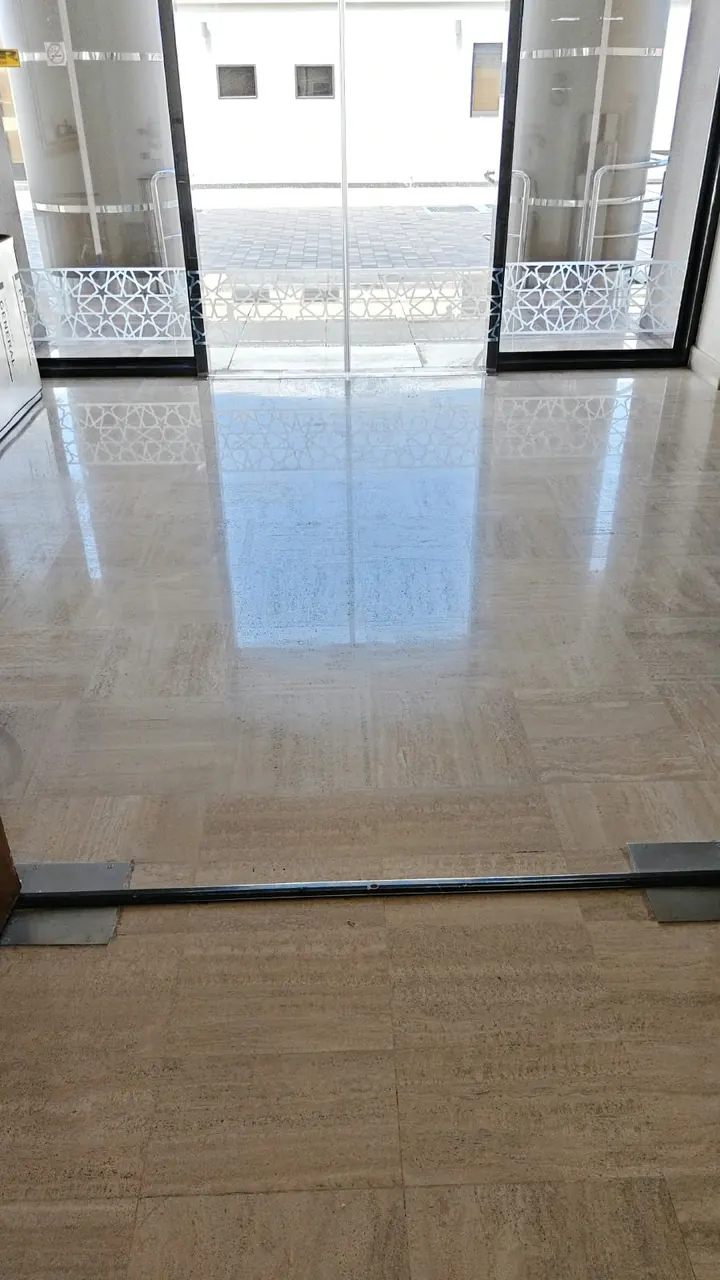
Travertine vs marble: are they the same?
No. Both form from calcium carbonate, but travertine is a type of limestone formed around mineral springs, while marble is metamorphic (formed under heat and pressure). The easiest visual giveaway: travertine has small natural holes and voids and a warm, banded look; marble has flowing veins and a denser, glossier surface.
Why travertine needs void-filling
Those natural holes are travertine's defining feature — and its weak point. Before polishing, every void should be filled with colour-matched epoxy; otherwise the surface pits, traps dirt and cannot reach a flat, high gloss. Many generic companies skip this step, which is why poorly-done travertine looks rough soon after.
How polishing differs
Marble polishes to a deep mirror gloss relatively easily. Travertine needs the extra void-filling and lippage-grinding stage first, then a finer finish and a breathable sealer rated for UAE heat. Both finish beautifully — travertine just takes an extra, specialist step.
Which is better for UAE homes?
Travertine suits warm, natural, Mediterranean-style interiors and outdoor areas like pool surrounds (with the right sealer). Marble suits a more luxurious, high-gloss look. Both perform well when properly maintained — the choice is mostly about the look you want.
Travertine vs marble: upkeep over the years
Both stones are calcium-based, so both etch with acids and both need sealing. Travertine has one extra job: its filled holes can wear or drop out in busy areas and need topping up. Marble usually shows scratches and etch marks more clearly, especially in light colours.
Over the years the cost of upkeep is similar. What differs is the kind of care each one needs.
Further reading: Travertine on Wikipedia.
Want an exact price for your floor?
Free on-site inspection, fixed-price quote and a 1-month written guarantee — across all 7 UAE emirates.
Frequently asked
Is travertine a type of marble?
No. Travertine is a form of limestone with natural holes; marble is a denser metamorphic stone with veins. They need different polishing techniques.
Does travertine need to be filled before polishing?
Yes — its natural voids should be filled with colour-matched epoxy before polishing, or the surface pits and cannot reach a smooth, high gloss.
Can you polish travertine to a shine like marble?
Yes. With proper void-filling, grinding and sealing, travertine reaches a beautiful high-gloss finish.